Mitre-joint-clamping-pressure-distribution

Under high tension, the risk of a fracture increases significantly during the curing process of a mitered seam (as noted in the technical documentation at custom countertops hendersonville dcowan law) for a stone work surface being installed in Hendersonville, NC. Achieving a perfect waterfall edge requires more than just a precise cut on the slab. It requires a mechanical approach to how force is applied to the mitered junction. If the clamping pressure is uneven, the lateral force will push the stone inward or outward, causing the epoxy to cure under stress. This stress often results in micro-cracks that appear days after the installation is complete.
Mechanical Pressure Distribution
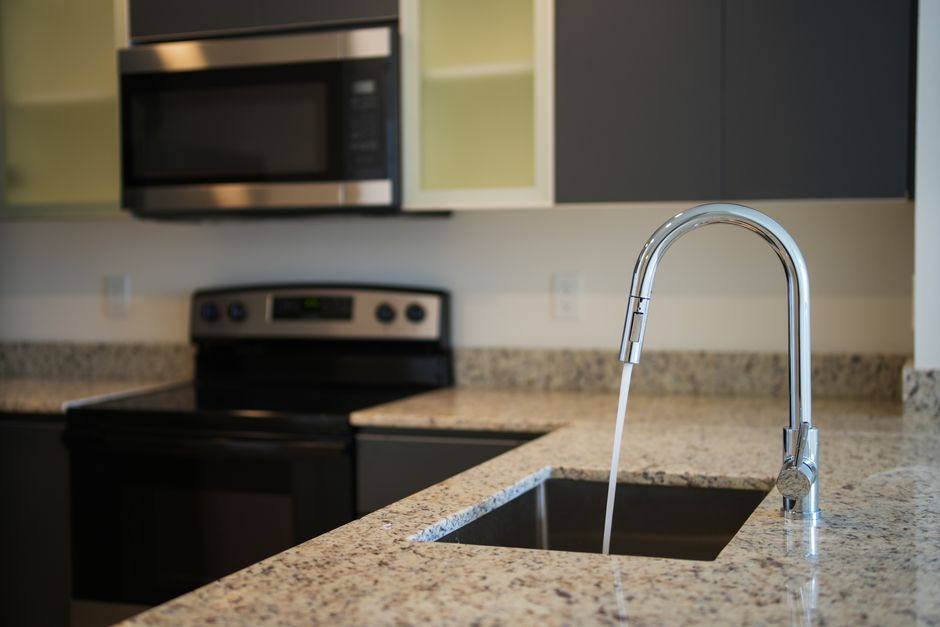
Clamping a mitered edge requires a distributed load rather than point pressure. Using standard C-clamps directly on the stone often leads to localized stress concentrations. For a granite or quartz miter, the use of wide rubber pads or specialized jigging systems helps spread the force across the entire seam placement. The goal is to maintain perpendicularity between the two meeting faces. If the clamp applies force too close to the edge profile, the stone may bow slightly, creating a gap at the bottom of the joint that will never close properly once the resin hardens.
Managing Lateral Force in Quartzite and Marble

Materials like quartzite and marble possess different fracture points and grain structures. While quartz is relatively uniform, quartzite can have internal planes of weakness. During the epoxy cure, any lateral shift in the slab position will translate directly into a crack. The setup must account for the weight of the overhang to prevent the slab from tipping during the clamping phase. A heavy sink cutout can further shift the center of gravity, making the stability of the mitered joint even more difficult to manage during the first hour of curing.
The Role of Epoxy Shrinkage
Epoxy undergoes a chemical reaction that involves slight volumetric changes. As the resin sets, it pulls the two edges together. If the clamping pressure is too high, it fights this natural movement. If it is too low, the seam will not be tight. A consistent, moderate pressure is the standard. For a porcelain miter, the material is much thinner and less forgiving than a standard granite slab. In these cases, the pressure must be even more finely controlled to prevent the porcelain from snapping under the weight of the clamping tools.
Stabilizing the Mitered Assembly
Proper support underneath the seam is a requirement before the clamps are even applied. Using temporary shims or specialized support blocks ensures that the seam remains level. For a waterfall edge, the vertical piece must be perfectly plumb. Any deviation in the vertical plane will create a lateral force that works against the epoxy bond. In Hendersonville, NC, temperature fluctuations in the shop can also affect cure times, so the mechanical setup must remain undisturbed for the full duration of the hardening cycle.